 However, in most cases you start with ggplot(), supply a dataset and aesthetic mapping (with aes()). You then add on layers (like geom_point() or geom_histogram()), scales (like scale_colour_brewer()), faceting specifications (like facet_wrap()) and coordinate systems (like coord_flip()).
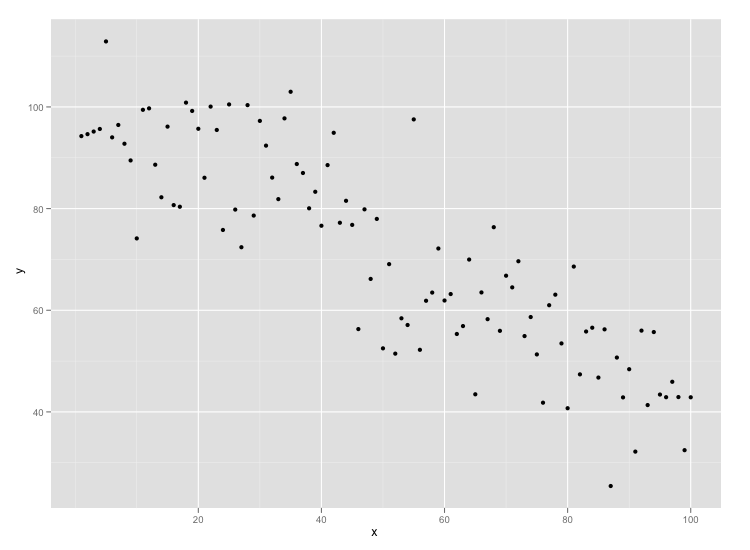 Plots may be created via the convenience function qplot() where arguments and defaults are meant to be similar to base R's plot() function. [19][20] More complex plotting capacity is available via ggplot() which exposes the user to more explicit elements of the grammar.